

Interstellar Enigmas: Navigating the Labyrinth of Clues in Resident Evil Requiem
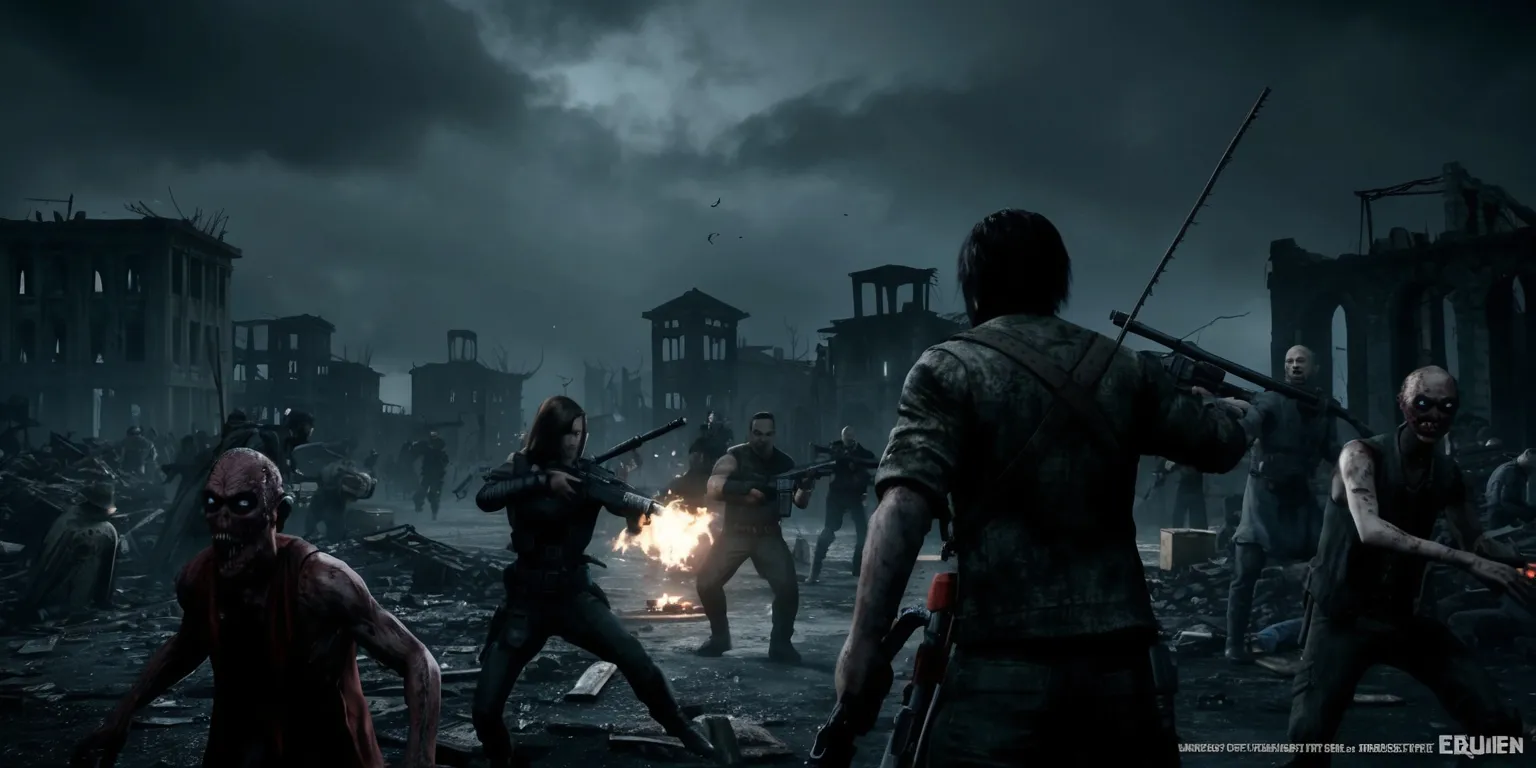
Resident Evil Requiem presents a labyrinth of enigmas that captivates players with its perplexing challenges and subtle hints embedded throughout the gameplay. The mysterious final puzzle is intricately woven into the storyline, drawing attention from those who delight in rare and clever conundrums. The game developers have scattered clues across different environments, linking distant elements that include symbolic gestures, physical artifacts, and cleverly hidden numbers that allude to real-world measurements. This distinctive design impeccably encapsulates the core spirit of an… immersive puzzle experience where each component carries both narrative weight and computational significance. Players are encouraged to decode every nuance, making the journey through Requiem a blend of exploration, discovery, and intricate reasoning.
Decoding the Obscure Clue
At the core of the final challenge lies an enigmatic phrase: "Let the sweet pair hear the voice." This clue has confounded enthusiasts, prompting debates on its hidden meaning. Many speculate that the “sweet pair” may refer to important characters whose relationships underpin much of the game’s narrative. Alternatively, it might signal an interaction between characters or even hint at a symbolic pairing that transcends the literal. Equally puzzling is the reference to “the voice,” suggesting auditory clues or possibly voice-activated inputs during gameplay. Players have experimented with translating these words into actionable steps, parsing letters and sounds, and even exploring the spatial relationship between characters. This multifaceted clue has evolved into a signature challenge, elevating the puzzle’s complexity with its open-ended design.
Fragmented Evidence: The Severed Hand
One of the earliest clues players encounter involves a macabre yet integral object: a severed hand. This element is encountered immediately after escaping the confined depths beneath Rhodes Hill Care Center, where a sudden twist in the narrative results in its unexpected appearance. The object, though seemingly grotesque, functions as a pivotal piece of evidence, drawing players to experiment with its interaction within the game environment. When combined with other mechanics, particularly its placement into a laser device, the severed hand becomes more than a mere graphic assault—it transforms into a key component in the puzzle’s progression. This tangible artifact challenges the player to consider both the narrative implications and the mechanical functions provided by its integration with various in-game items and puzzles.
Interpreting the Laser Mechanism
The Laser Microscope device featured within Resident Evil Requiem is far more than a standard tool for scanning anomalies. In the context of the final puzzle, it serves as an interface to translate complex codes embedded within other clues. Players discover that by inserting the severed hand into this device, the game reveals a cryptic message accompanied by an alphanumeric sequence that hints at underlying biological or astronomical references. The device’s labeling on its side further fuels the mystery by linking seemingly random numbers to significant real-world distances, such as those related to the sun. This intriguing blend of in-game technology and external scientific facts forces players to Close the divide between digital renderings and the physical realm reality. It is through careful manipulation of this interface that the puzzle begins to yield its deeper secrets.
Celestial Symbols and Real-World Connections
A consistent theme in Resident Evil Requiem is the interplay between terrestrial puzzles and cosmic metaphors. In one segment of the game, players are presented with clues that reference astronomical bodies. The discovery of an engraved hourglass reveals a code that intriguingly matches the distance between Earth and its natural satellite. Similarly, another clue is linked to an analysis report that correlates a particular symbol with the nearest star in the cosmos. These parallels are not coincidental; they serve to reinforce the game’s attention to detail and its ambition to integrate scientifically grounded information into its narrative fabric. By connecting numerical values with celestial distances, the game encourages players to step beyond conventional puzzle-solving techniques and embrace an analysis that accounts for both symbolic representations and literal measurements.
Unraveling the Intricacies of the Puzzle Box
Another focal point in the final puzzle challenge is the Lead Researcher’s Puzzle Box. Hidden within the labyrinthine corridors of Rhodes Hill Care Center, this box demands the player’s attentiveness and ingenuity. Initially, the box appears to be a conventional container for in-game items such as the Star Quartz and a Notebook. However, its true value is realized following the scanning of the severed hand—a process that transforms the box into an interactive device for code translation. Players must recognize the subtle cues, such as the interplay between sun, moon, and star symbols that are etched onto the box. This realization prompts the translation of a seemingly arbitrary sequence of characters into a meaningful code. The puzzle box, therefore, exemplifies the game’s emphasis on integrated problem-solving, where discovery and research converge to unveil hidden meanings.
Environmental Challenges and In-Game Artifacts
Resident Evil Requiem is designed to push players are thrust into a perpetual state of alertness, where every corner of the environment hides a potential clue. In one memorable encounter within a sports court, a caged artifact resembling a playful figurine is observed interacting with another inanimate object. Such moments are intentionally crafted to evoke curiosity; by combining physical artifacts like a bobblehead with atmospheric elements (such as sparse background details and ambient sounds), the game reinforces the idea that no detail is trivial. The integration of these seemingly minor objects into larger puzzle elements demands that players maintain an acute awareness of their surroundings. The dynamic interactivity of the setting—with hidden messages accessible only through deliberate environmental manipulation—adds An additional layer of intricacy to the overall structure challenge.
Exploring the Role of In-Game Documentation
Apart from physical artifacts and environmental setups, Resident Evil Requiem also supplies a wealth of documentary clues that require careful perusal. One notable example is the detailed blood analysis report of a major character. Hidden in the less-traveled sections of the facility, this document offers a seemingly mundane scientific observation that metamorphoses into a critical piece of the overarching puzzle. The report states specific numerical values that, when juxtaposed with hints from other elements, reveal a correspondence with astronomical units. The integration of such textual evidence underscores the game’s commitment to layered storytelling. In this way, each piece of documentation more than merely deepening the narrative, it also functions as a vital instrumental tool for those attempting to piece together the fragmented components of the final puzzle.
Enhancing the Puzzle Through Sequential Interactions
In addition to static clues, Resident Evil Requiem challenges players with sequential interactions that require returning to earlier puzzle elements in a New Game Plus scenario. Once the initial parts of the puzzle are discovered, the game encourages repeated engagement with the Lead Researcher’s Puzzle Box. With each revisit, the previously acquired code undergoes a transformation that hints at a merging between the severed hand’s message and the symbols derived from celestial distances. This layered process underscores the dynamic nature of the challenge—initial information must be re-evaluated and reassembled in light of new discoveries. Such iterative interactions demand persistence and intellectual agility. Players are thus invited to experiment with multiple combinations of codes and symbols before arriving at a final, resonant sequence that unlocks further narrative and in-game progress.
Integrated Testing and Community Collaboration
The evolution of the final puzzle is marked by the significant role played by dedicated members of the player community. As enthusiasts began to share their findings and experimental triumphs, a collective effort emerged to test theories and validate potential solutions. Through in-depth datamining and countless hours of gameplay, contributors have pieced together subtle hints that not only clarify ambiguous messages but also reveal a step-by-step procedure. This A unified team effort resulted in the uncovering of a comprehensive method for interpreting the final puzzle’s code, involving everything from recalibrating the severed hand’s message to adjusting inputs on the puzzle box. The cooperative research among community members has not only amplified the gaming immersion but also highlighted the game’s sophisticated design, which rewards persistence and collective reasoning.
Combining Clues into a Coherent Code
A central turning point in solving the final puzzle is the successful translation of fragmented clues into a coherent code. Players are guided through a process where elements such as the severed hand’s sequence and the symbolic assignments of celestial bodies converge into a single, intricate script. Each character in the in-game code corresponds to a specific celestial element—the sun, the moon, or the nearest star—based on numerical clues derived from distances in space. The puzzle’s design requires not only high levels of analytical thinking but also a creative reevaluation of earlier interactions with environmental objects and documentation found within the Care Center. This demanding translation process holds the key to triggering unique in-game events, including the unprecedented sound of childlike laughter that signifies the activation of the puzzle’s final stage.
Embracing Complexity in Interactive Storytelling
Resident Evil Requiem stands out due to its intricate melding of storytelling and interactive puzzle elements. The final challenge is not merely a test of observational skills; it is an exercise in embracing the game’s underlying narrative through active exploration and problem resolution. The carefully integrated clues—ranging from dismembered relics to astronomical calculations—demand that players navigate between layers of the story while respecting the game’s internal logic. Each distinct artifact "not only amplifies the story's complexity but also" requires deliberate experimentation with in-game mechanics. The iterative nature of attempting new playthroughs and returning to previously explored elements injects a sense of mystery and anticipation that permeates every step. Enthusiasts find that the blend of narrative richness and puzzle complexity creates an experience "...that provides rigorous mental stimulation as well as deep emotional resonance...".
0 Comments
Your comment is awaiting moderation. We save your draft here